Theme park Fujiyoshida, Japan
Fuji-Q Highland Tickets & Visitor Guide
Japan's most extreme coaster park sits at the foot of Mt Fuji — and walking in costs nothing. What you pay for is the rides, so pick the right ticket before you board the bus.
ⓘ Independent guide — not the official Fuji-Q Highland website. Verify details on the official site before visiting.
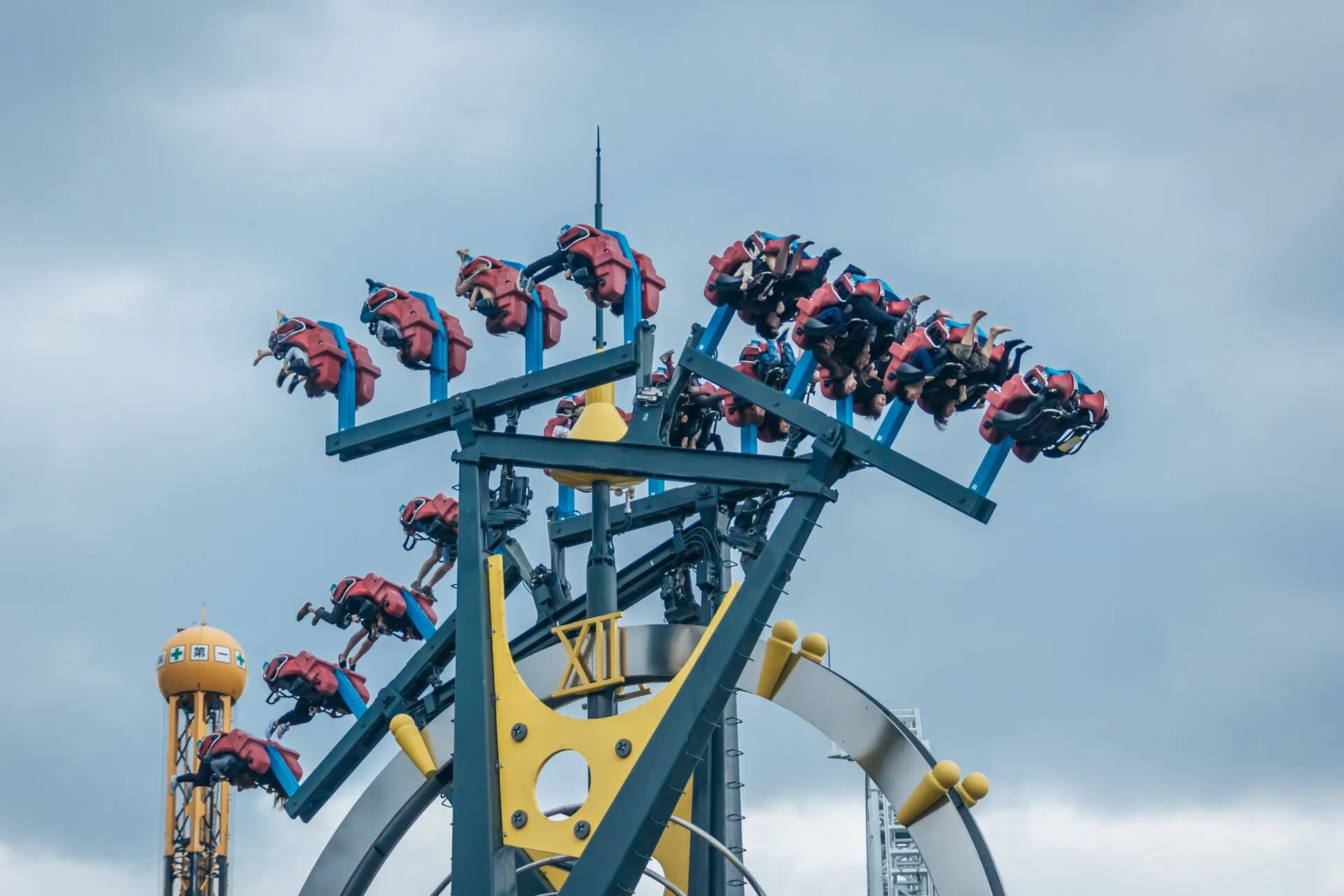
Fuji-Q Highland is the thrill park Japan measures all others against: a compact site at the foot of Mt Fuji stacked with record-chasing coasters — Fujiyama, Takabisha, Eejanaika — and a view that turns every lift hill into a photo. It is not a Disney-style resort; it’s a regional park with a national reputation for scaring people.
The single most misunderstood thing about Fuji-Q is the pricing. Entry is free — you can walk the park, shoot Mt Fuji between coaster tracks, and pay only for what you ride. Whether you buy the unlimited Free Pass, an afternoon pass, or single ride tickets changes the cost of your day by a factor of three, so get this decision right before you travel.
Quick Summary
| Quick fact | Detail |
|---|---|
| Tickets from | Park entry free; 1-Day Free Pass ¥6,000–7,900 (~€35–46) adult depending on date; single rides roughly ¥800–2,000 each [source: official Fuji-Q Highland price calendar] |
| Opening hours | Typically 9:00–18:00, but the schedule shifts daily and seasonally — check the official calendar for your date |
| Advance booking | Recommended: Free Pass prices are date-based and online purchase skips the ticket windows |
| Time needed | Full day for the coaster lineup; a half-day afternoon pass works on quiet weekdays |
Ticket Types Compared
Fuji-Q’s free-entry model means you assemble your own price. Four realistic options:
Free entry + single ride tickets
Walk in for nothing and buy attraction tickets individually — the headline coasters sit at the top of the per-ride price range (around ¥1,500–2,000 each per the official price list), smaller rides less.
- Best for: non-riders accompanying a group, photographers, one-coaster pilgrims, parents heading only to Thomas Land.
- Skip if: you plan three or more major rides — the math flips fast.
1-Day Free Pass
Unlimited rides for the day, priced by date on the official calendar: about ¥6,000–7,900 for adults (18–64), less for junior/senior high students, elementary kids, preschoolers and over-65s. Buying online in advance locks your date’s price and skips the morning ticket queue.
- Best for: anyone here for the coasters. Four big rides already beats pay-per-ride.
- Skip if: the weather forecast is bad — coasters suspend in rain and high wind, and a Free Pass on a stormy day is money down the mountain.
Afternoon Pass (from 13:00)
Unlimited rides from 1pm, roughly ¥4,100–6,000 by date. On off-peak weekdays, queues are short enough that an afternoon genuinely covers the big four-minus-one.
- Best for: day-trippers arriving on late-morning buses from Tokyo; budget visitors on quiet dates.
- Skip if: you’re visiting on a weekend or holiday — you’ll want the full day.
Priority tickets and extras
Fuji-Q sells paid priority passes per attraction (price varies by date and ride) that near-eliminate waits, plus separately ticketed experiences like the Super Scary Labyrinth of Fear haunted walk-through. The Free Pass does not include the haunted house.
- Best for: peak-day visits when the top coasters post 90+ minute standby waits.
- Skip if: you arrived at opening on a weekday — ride order tactics below do the same job free.
Timing Is Everything
- Quietest: midweek outside Japanese school holidays, especially January–February (cold but crisp — the best Mt Fuji visibility of the year) and June’s rainy-season gamble days.
- Busiest: weekends, Golden Week (late April–early May), summer holidays (late July–August) and the autumn colour weekends.
- Weather is the real variable. Wind and rain suspend the big coasters, and winter mornings can delay openings for de-icing. Check the operation calendar and ride status the morning of your visit — locals do.
- Best photo time: early morning for cloud-free Fuji views (the mountain often disappears behind cloud by midday); the Fujiyama lift hill against the volcano is the classic frame.
- Arrival tactic: be at the gate before opening and go straight to Fujiyama or Takabisha — the first hour is worth two afternoon hours in ride count.
Note for 2026: Eejanaika has been listed as temporarily closed since March 2026 on partner platforms — verify it’s running before you build your visit around it.
The Insider Entry
Guests of the park’s own Highland Resort Hotel & Spa (adjacent to the gates) are offered priority admission ahead of general opening as a stay benefit — check the current hotel-guest perks when booking. With Fuji-Q’s biggest queues forming in the first hour, even a small head start onto Fujiyama changes the shape of your morning. The hotel also solves the early-arrival problem: highway buses from Tokyo can’t beat a 30-second walk.
How to Save
- Do the Free Pass math honestly: at roughly ¥1,500–2,000 per major coaster, three to four rides equals the pass. Fewer, and pay-per-ride wins.
- Pick a cheap date: the pass is dynamically priced across a ¥1,900 spread — off-peak weekdays sit at the bottom of the range.
- Afternoon Pass saves ¥2,000 or so if you only need half a day.
- Seniors 65+ and preschoolers pay a fraction of the adult rate (around ¥2,100–2,600 for a full pass).
- Bus + ticket bundles from Tokyo (sold by the bus operators and travel platforms such as Klook, availability permitting) usually beat buying transport and pass separately.
- Skip the Free Pass for non-riders — they enter free and can buy a single ride or coffee instead.
How to Get There
Fuji-Q Highland is in Fujiyoshida, Yamanashi, about 100km west of Tokyo at the base of Mt Fuji.
- Highway bus (simplest): direct services from Shinjuku Expressway Bus Terminal, Shibuya, Tokyo Station and Yokohama stop at the park’s own bus stop — around 100–120 minutes from Shinjuku, typically ¥2,000–2,500 one way.
- Train: JR Chuo line limited express to Otsuki, then the private Fujikyuko line to Fuji-Q Highland Station, which opens directly beside the park. Some direct Fuji Excursion limited-express trains run from Shinjuku.
- Driving: Chuo Expressway to the Kawaguchiko IC — the park sits practically at the ramp. Parking is paid.
- Pairing with a Fuji trip: Kawaguchiko’s lakeside sights are one train stop or a short bus ride away, so many itineraries do coasters in the morning and the lake at sunset.
Inside the Park: What’s Worth Your Queue
The big machines are the reason you came. Fujiyama (1996) is the beloved veteran — 79m tall, 130 km/h, once the world’s tallest coaster, and still one of its great out-and-back rides, with Fuji filling the horizon on the lift. Takabisha counters with a 121-degree beyond-vertical drop off a vertical lift — brace on the hang before the release. Eejanaika, one of only a handful of 4th-dimension coasters worldwide, rotates its seats independently through the layout (confirm it’s operating in 2026 before queueing hopes on it). Zokkon (2023), a motorbike-style multi-launch coaster over 1.3km of track, is the park’s newest headliner and its most rerideable.
Beyond the giants: the Super Scary Labyrinth of Fear is a legendarily long haunted-hospital walk-through (separate ticket), Thomas Land keeps under-6s busy with a dozen gentle rides, and the anime-themed areas — including the NARUTO × BORUTO zone — rotate collaborations that keep locals returning.
One-day plan: Fujiyama at opening, Takabisha second, Zokkon before lunch, then re-rides, the Ferris wheel for the Fuji panorama, and the haunted house if your nerves have budget left.
Where the Data Comes From
Prices, hours and the free-entry model described here come from the official Fuji-Q Highland website (ticket and price-calendar pages) and partner listings, checked on the date shown below. Fuji-Q prices vary by date and rides close for weather and maintenance without much notice — confirm the operation calendar for your visit day.
Frequently Asked Questions
Is Fuji-Q Highland really free to enter?
Yes — park admission is free, and has been since 2018. You pay per attraction, or buy a 1-Day Free Pass for unlimited rides. Free entry makes sense if you're mainly visiting for photos, Thomas Land with a toddler, or one or two specific coasters.
How much is the Fuji-Q Highland Free Pass?
The 1-Day Free Pass is date-based: roughly ¥6,000–7,900 (~€35–46) for adults on the official calendar, with lower rates for students, children and seniors. Afternoon passes (from 13:00) run about ¥4,100–6,000.
Is the Free Pass worth it, or should I pay per ride?
Big coasters cost around ¥1,500–2,000 each as single tickets, so the Free Pass pays for itself at three to four major rides. If you'll ride fewer — or you're visiting with a non-rider — free entry plus individual tickets is the cheaper route.
What happened to Do-Dodonpa?
The world-record accelerating coaster has been closed since August 2021 after rider injuries, and Fuji-Q announced its permanent retirement in March 2024. Its replacement thrills come from Fujiyama, Takabisha, Eejanaika and the 2023 motorbike coaster Zokkon.
Do Fuji-Q's coasters close in bad weather?
Yes, readily. The big coasters suspend operations in rain, high wind or winter icing, and individual rides (Eejanaika among them in 2026) can be down for extended maintenance. Check the official operation calendar the morning you go before committing to a Free Pass.
How do I get to Fuji-Q Highland from Tokyo?
Direct highway buses from Shinjuku, Shibuya and Tokyo Station reach the park's own bus stop in roughly 100–120 minutes and are the cheapest simple option. By rail, take the JR Chuo line to Otsuki, then the Fujikyuko line to Fuji-Q Highland's own station.
How tall and fast are Fuji-Q's roller coasters?
Fujiyama (1996) stands 79m with a 130 km/h top speed and was once the world's tallest coaster. Takabisha holds a 121-degree beyond-vertical drop, and Eejanaika is one of the world's few 4th-dimension coasters with independently rotating seats.
Ready to plan your visit?
Compare ticket options, check live availability and lock in your date for Fuji-Q Highland.
See Prices on KlookGuide last updated: 2026-08-18. Facts are sourced from the official Fuji-Q Highland website and our ticketing partners; always double-check before you travel.